
The evolution of personal technology has followed a fascinating trajectory. For decades, our devices lived on our desks, bulky and immobile. Then they migrated to our pockets, becoming powerful handheld computers that we could not live without. Now, the final frontier of this journey is our bodies themselves. We have moved beyond the era of merely carrying technology to the age of wearing it, and the latest innovations are making that integration more seamless, more personal, and more profound than ever before. The wearable market has exploded far beyond the now-ubiquitous smartwatch, diversifying into a stunning array of form factors designed for every part of your person. From the discreet and increasingly powerful smart rings that track your health from your finger to augmented reality glasses that project a digital world before your eyes, and even AI-powered pins that can read the emotions of the people you meet, the future of tech is no longer something you hold—it is something you put on. This guide will navigate you through the most exciting and innovative wearables available and on the horizon, helping you understand which devices are truly revolutionizing how we interact with technology and manage our health.
The Rise of the Smart Ring: Health and Connectivity on Your Finger
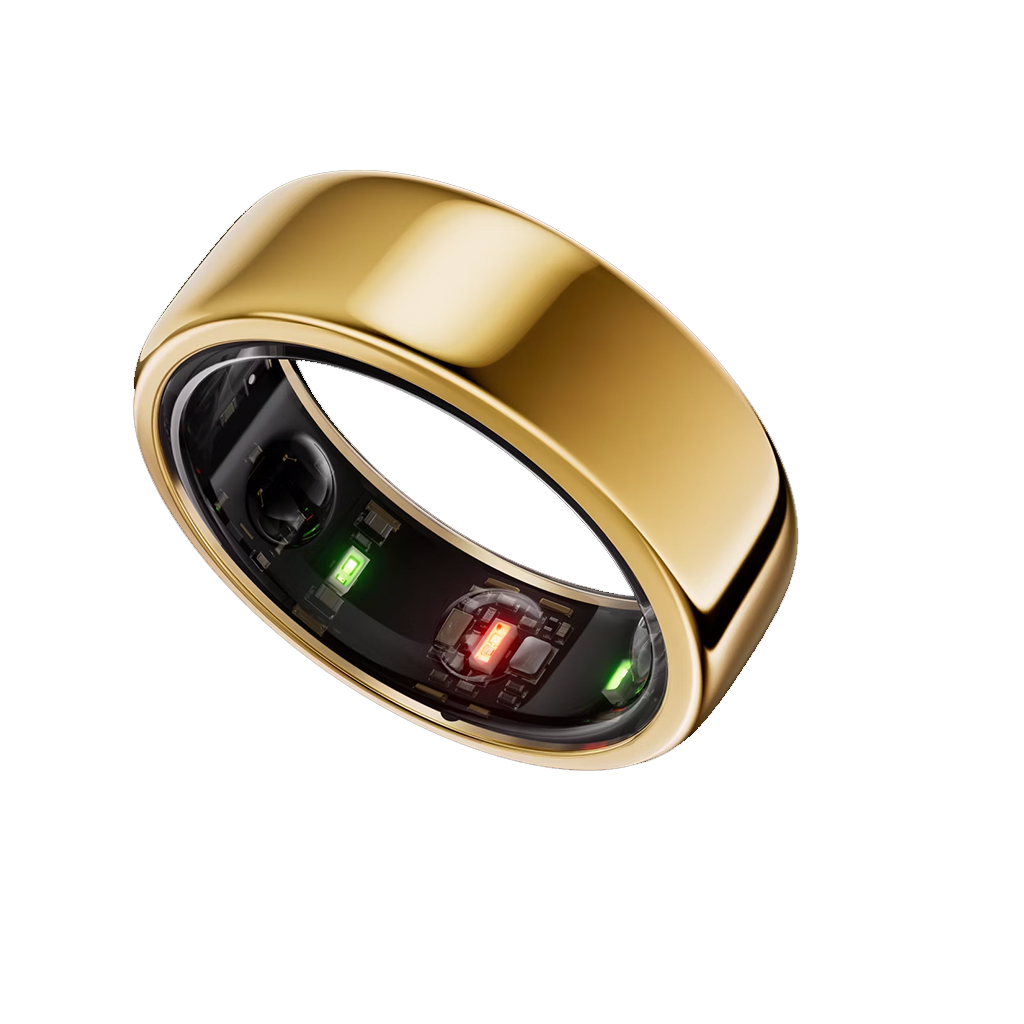
Perhaps the most significant trend in wearables over the past few years has been the rise of the smart ring. These unobtrusive devices offer a compelling alternative to the bulky smartwatch, providing powerful health and activity tracking in a form factor that is comfortable enough to wear 24 hours a day, seven days a week. The market has matured rapidly, with several key players now battling for dominance, each offering a unique value proposition. For anyone looking to monitor their sleep, recovery, and overall wellness without the distraction of another screen on their wrist, the smart ring has become the ultimate tool. The global market for these devices is projected to explode, reaching an estimated value of over $2.2 billion by 2032, a testament to their growing popularity and utility .
At the top of the heap, the Oura Ring 4 remains the gold standard for comprehensive health tracking. PCMag, after extensive testing, has awarded it their Editors’ Choice, and for good reason . The Oura Ring 4 provides an astonishingly detailed picture of your well-being, tracking everything from activity and sleep stages to stress levels and even cardiovascular age. Its redesigned sensors ensure accuracy even as the ring naturally rotates on your finger throughout the day and night, preventing the data gaps that plagued earlier models. The companion app is a masterclass in data presentation, distilling complex biometrics into simple, actionable readiness, activity, and sleep scores. It can track forty different types of exercise and offers long-term assessments like cardio capacity, helping you understand if your fitness routine is actually working. With a battery life that comfortably exceeds a week, you can wear it continuously, making it an ideal travel companion. However, this level of insight comes at a cost, both in terms of the upfront price and the monthly subscription fee required to unlock most of its features . For those who are serious about holistic health and willing to invest, the Oura Ring 4 is unrivaled.
For those who find subscription fees philosophically objectionable or are simply looking for a more budget-friendly entry point into the world of smart rings, the RingConn Gen 2 Air presents a compelling alternative . This ring has carved out a niche for itself by offering excellent core functionality without any recurring costs. For a very reasonable price, you get a stylish and comfortable device that tracks calories, heart rate, steps, stress, and provides exceptionally detailed sleep data, including stages, skin temperature, SpO2, and respiratory rate. In testing, its sleep tracking proved to be remarkably accurate, rivaling the detail of the much more expensive Oura . Its battery life is a class-leading ten days, meaning you can wear it for nearly two weeks before needing to think about charging. While it does not offer the same level of exercise tracking detail or AI-powered insights as the Oura, it covers all the basics with competence and style. It is the perfect choice for first-time buyers or anyone who wants a reliable health and sleep tracker without the financial commitment of a subscription .
Samsung has entered the fray with its Galaxy Ring, and as you might expect, it integrates seamlessly into the broader Samsung ecosystem . Designed to work best with Samsung phones, this ring is exceptionally lightweight, attractive, and comfortable to wear. It delivers helpful, AI-powered health insights through the Samsung Health app and, like the RingConn, does not require a monthly subscription fee, which is a major point in its favor . The charging case is a nice touch, holding an extra charge for on-the-go power top-ups. However, our testing revealed some accuracy issues compared to the market leaders, and its functionality is significantly limited when paired with non-Samsung Android phones or iPhones . For users deeply invested in the Samsung Galaxy ecosystem who want a stylish and subscription-free health tracker, it is a solid option. For everyone else, the Oura or RingConn offer a more consistent and feature-rich experience.
The competition is heating up even further with the announcement of the Ultrahuman Ring Pro. This new entrant is aiming to shatter battery life records, with the manufacturer promising an incredible fifteen days of use on a single charge . If it delivers, this would be a game-changer, surpassing even the long-lasting RingConn. The Ring Pro also comes with a sophisticated charging case that resembles a jewelry box and can store a year’s worth of tracking data if the ring is not connected to your phone. It will feature an AI assistant named Jade, capable of answering natural language questions about your health data, such as “How can I improve my sleep?” . Ultrahuman offers most core functions for free, but plans to charge for advanced plugins like atrial fibrillation detection. Meanwhile, Chinese manufacturer Dreame (known for its robotic vacuums) is making a massive push into wearables with its new AI Glow. This ring is the world’s first to offer, or fingertip AI ECG analysis . With a thickness of just 2.5mm and a weight of only 3.8 grams, it is designed or ultimate imperceptible wearing. It combines heart rate, blood oxygen, and temperature sensors with an AI model trained on millions of data points to provide personalized health baselines . Priced aggressively at around 1499 yuan (roughly $200), it represents a new wave of feature-rich, affordable smart rings coming out of China .
Looking ahead, the future of smart rings is even more exciting. At CES 2026, RingConn previewed its upcoming Gen 3 model, which promises to introduce “smart vibrations” for discreet haptic notifications and alarms, as well as long-term blood pressure trend insights . This moves the ring from a passive data collector to an active communication device and a more powerful health tool. Similarly, the Dreame Haptic ring, also shown at CES, is built around a vibration motor that can provide gentle alerts for health notifications, finally allowing wearers to leave their phones in their pockets and still stay informed . Another fascinating concept is the Vocci dictation ring, which is designed for productivity. With a single button, you can record up to eight hours of audio, which is then processed by AI into transcripts and summaries, turning your finger into a powerful tool for capturing meetings and ideas . These innovations prove that the smart ring is just beginning to reveal its full potential.
Seeing the Future: Smart Glasses and Augmented Reality
While smart rings work in the background, smart glasses are bringing technology directly into our field of vision. After years of false starts and bulky prototypes, 2026 is shaping up to be the year that smart glasses finally become stylish, practical, and powerful. At the recent Mobile World Congress in Barcelona, a wave of new glasses demonstrated that the future of wearable displays is bright, lightweight, and incredibly useful. These are no longer the clunky, obvious headsets of the past; they are beginning to look like the stylish eyewear you would actually want to wear.
One of the most impressive debuts came from Alibaba with its Qwen Glasses S1. These smart display glasses stood out for their exceptional usability and intuitive design . When you put them on, they instantly recognize you and bring up a monochrome green waveguide display right before your eyes. Navigating the menu with taps and swipes on the temple feels natural and responsive. The built-in apps are genuinely useful: an AI camera that accurately describes your surroundings, a teleprompter, and, most impressively, a real-time translation feature. During a demo at MWC, the glasses automatically detected a nearby conversation in a different language and began translating it live, displaying the words as they were spoken. The feeling of being a spy from the future was apparently quite profound . Already available in China for around $500, these glasses are lighter and better-looking than many competitors, setting a new bar for what consumer AR glasses can be.
For those who want a massive screen for entertainment without the bulk of a VR headset, the RayNeo Air 4 Pro is a fantastic option. These augmented reality glasses project a virtual 201-inch Micro-OLED display in front of your eyes, perfect for watching movies, gaming, or working on the go . They simply connect via USB-C to your phone, laptop, or tablet, mirroring the screen for a private, cinema-like experience. RayNeo even had some fun at their launch, releasing a Limited Justice Edition with a lens shade designed to look like a Batman mask, and a Chaos Edition themed after the Joker . While the superhero styling is a fun gimmick, the underlying technology is a serious step forward for personal, portable displays.
The smart glasses category is also expanding to address health and accessibility in innovative ways. The Cearvol Lyra, for instance, hides powerful hearing aid technology inside the stems of stylish, ordinary-looking glasses . Powered by NeuroFlow AI 2.0, they can separate voices from background noise, dramatically improving speech clarity for those with hearing difficulties. By embedding this technology in fashionable “Boston” and “Wellington” frames, Cearvol is removing the stigma often associated with traditional hearing aids . Similarly, Xgimi, a company better known for projectors, has entered the wearables space with its MemoMind glasses. These focus on being an intelligent assistant, offering real-time translation, conversation summarization, and teleprompter-style reminders directly in your line of sight, all powered by a hybrid of OpenAI and Azure AI models . With interchangeable temples and prescription support, they are designed to feel like real eyewear, not just a gadget.
Beyond the Ring and the Glass: The New Wave of Wearable Innovation
The innovation in wearables extends far beyond our fingers and faces. From AI-powered pins that analyze social interactions to smart headbands that can lull you to sleep, inventors are finding new places on our bodies to put technology, and in doing so, they are creating entirely new categories of devices. These gadgets are designed to be proactive, intelligent, and deeply integrated into our daily lives, often working in the background to improve our health, productivity, and understanding of ourselves.
Perhaps one of the most intriguing and slightly futuristic concepts to emerge is the AI-powered social and emotional tracking device. The Scople, a small pin that attaches magnetically to your clothing, is designed to do exactly what its name suggests: scope out your environment . It uses a tiny camera and proprietary AI to analyze the emotions of the people you interact with. In demonstrations, it accurately detected whether a person was smiling, frowning, or scowling. It also promises to analyze your surroundings and habits, gently nudging you to go outside if you have been indoors too long or to lay off the libations if you have had too much to drink . The company is keen to stress privacy, stating that the camera acts only as an “eyeball,” collecting data without saving any videos or photos. It is a bold experiment in using AI to understand our social world. Taking this concept a step further is the Nirva Necklace, which uses microphones and biosensors to log your conversations and physiological reactions throughout the day . It then analyzes this data to identify mood triggers and, in its most ambitious claim, pinpoint which relationships in your life might be toxic. While it sounds like science fiction, it represents a fascinating new frontier in using wearables for mental wellness and understanding how our social environment impacts our health .
Productivity is another major focus for this new wave of wearables. The SwitchBot AI MindClip, which won a “Best in Show” award at CES 2026, is a tiny, 18-gram device that clips discreetly onto your collar or pocket . It functions as a “second brain,” recording your daily conversations and meetings and converting them into summaries, to-do lists, and a searchable audio database. It is designed to be your personal backup hard drive for your memory, ensuring you never forget a detail from a crucial discussion. Similarly, the Plaud NotePin S refines the concept of the AI voice recorder with a simple but crucial addition: a dedicated physical button . A long press starts recording, and a short tap highlights key moments, removing the ambiguity of haptic-only controls. It now also comes with a wristband and lanyard, making it a complete and polished wearable kit for capturing thoughts and meetings on the go.
Finally, wearables are getting smarter about intervening in our biology in real time. The LumiSleep D1 sleep headband is a perfect example of this proactive approach . Unlike most sleep trackers that simply tell you how badly you slept the next morning, the D1 aims to improve your sleep as it is happening. It uses EEG sensors to monitor your brainwaves as you drift off and then generates adaptive audio—a responsive soundscape that shifts in sync with your brain activity to gently guide you into a deeper state of slumber. It creates a closed feedback loop between your brain and the device, offering a genuinely therapeutic solution for those who struggle to fall asleep. For athletes and fitness enthusiasts, the Speediance Strap offers a screen-free alternative to the data overload of a smartwatch . This simple band tracks training load, sleep, stress, and body temperature, feeding into a system that provides actionable readiness scores without the need for a monthly subscription or constant screen-checking. And for post-workout recovery, the Urevo AI Recovery Boots use AI-powered algorithms to analyze muscle condition in real time and automatically adjust pneumatic pressure, delivering a professional-grade leg massage therapy wirelessly . The wearable revolution is no longer just about counting steps; it is about creating a personalized, intelligent cocoon of technology that actively works to improve our health, our minds, and our connections to the world around us.